

Volume 26 · Chapter 2
Home Alive
Jesus Mezquia
Victim: Mia Zapata
Case at a glance
- When
- July 1993
- Where
- Capitol Hill and the Central District, Seattle, Washington
- Perpetrator
- Jesus C. Mezquia
- Victim
- Mia Zapata
- Outcome
- Convicted of first-degree felony murder in March 2004 and sentenced to 36 years; he died in custody on January 21, 2021, at 66
The case
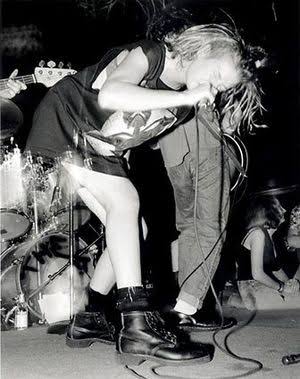
Mia Zapata sang for The Gits, a Seattle punk band that had built a following the hard way. She was 27, with a voice far bigger than she was. On July 6, 1993, she drank at the Comet Tavern on Capitol Hill, then stopped at a friend’s apartment nearby and left on foot after 2 a.m.
Her body was found before dawn on July 7, near 24th Avenue South and South Washington Street. She had been beaten, raped, and strangled with the drawstring from her sweatshirt hood. Detectives worked through the people who knew her and found nothing. The Seattle music community raised about seventy thousand dollars for a private investigator, and Zapata’s friends founded Home Alive, a self-defense nonprofit funded partly by a benefit album featuring Nirvana, Pearl Jam, and Soundgarden.
In 2002, saliva collected from a bite mark during the original autopsy gave a profile that went into the national DNA database. That December it matched Jesus Mezquia, a Cuban-born fisherman living in Florida, whose own profile had been added after a conviction for possessing burglary tools. He had lived roughly a mile and a half away from where Zapata was found and had no connection to her. Arrested in Miami in January 2003, he was convicted of first-degree felony murder in March 2004 and given 36 years. He died in custody on January 21, 2021.
Read the full story
This case is told in full in True Crime Case Histories, Volume 26 by Jason Neal.
Get Volume 26 on AmazonCase photographs
5 photos



Where it happened
Why this case
“This one sits in an odd place for me, because the investigation that finally worked was the boring kind: an old swab, a database, a match. Everything the city did in between, the fundraisers and the self-defense classes, mattered enormously to people who were frightened. It just was not what solved it.”
— Jason Neal, author of True Crime Case Histories


