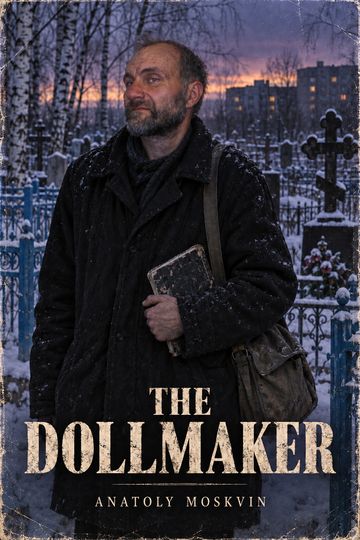

Volume 28 · Chapter 11
The Dollmaker
Anatoly Moskvin
Case at a glance
- When
- 2011 (bodies found November 2011)
- Where
- Nizhny Novgorod, Russia
- Perpetrator
- Anatoly Moskvin
- Outcome
- Found not criminally responsible in 2012 and ordered into compulsory psychiatric treatment; a court extended it again in 2026
The case
Anatoly Moskvin was a linguist, a newspaper columnist and one of Nizhny Novgorod’s leading authorities on its cemeteries. He said he had inspected more than 750 of the region’s graveyards on foot. He lived with his elderly parents in a flat crammed with books and, on the surface, was a mild and eccentric scholar.
For around two years before November 2011, families had found children’s graves disturbed, and police had no suspect. Then the trail led to Moskvin’s flat. Among the books, investigators found 26 mummified bodies of girls aged three to twelve, dressed in clothes and stockings, their faces covered with fabric or wax masks, some with music boxes inside. He had dug them up from cemeteries around the city and near Moscow, dried them with salt and baking soda and treated them as daughters. His parents had taken the figures for handmade dolls. The nameplates and photographs he had pried from the headstones let investigators identify the girls.
Moskvin told investigators he had believed the girls could one day be brought back to life. Diagnosed with paranoid schizophrenia, he was found not criminally responsible by a Nizhny Novgorod court in May 2012 and ordered into compulsory psychiatric care, an order reviewed regularly since. Doctors proposed outpatient treatment in 2018 and then withdrew the request, and courts in December 2025 and again in 2026 extended his hospitalization.
Read the full story
This case is told in full in True Crime Case Histories, Volume 28 by Jason Neal.
Get Volume 28 on AmazonCase photographs
5 photos


Where it happened
Why this case
“I struggled with how to write about Moskvin without turning the girls into props, so I tried to keep their parents in view. Families who had already buried a child learned years later that the grave was empty. The dolls are what people remember. Those families are who I kept thinking about.”
— Jason Neal, author of True Crime Case Histories


