
Volume 28 · Chapter 9
It Couldn’t Be Helped
William Gravlin
Victims: Bette Gravlin · Betty Sue Gravlin
Case at a glance
- When
- September 28, 1964
- Where
- Troy, Oakland County, Michigan
- Perpetrator
- William G. Gravlin
- Victims
- Bette Gravlin, Betty Sue Gravlin
- Outcome
- Found legally sane and convicted of first-degree murder in 1968; sentenced to mandatory life; reported to have died in 1994
The case
William Gravlin, 30, was a Royal Oak, Michigan, firefighter until 1961, when he slashed his cousin’s wife with a knife and was committed to Pontiac State Hospital, which discharged him in July 1964. His wife, Bette, 40, lived at 2121 Garson in Troy with their five-year-old daughter, Betty Sue, and Bette’s five children from her first marriage: Benson, Judith, Dorrie, Paula and Walter Bentley, aged 17 to 10.
A week earlier Bette had asked for a divorce, and Gravlin moved to his mother’s house in Clawson. Late on September 27, 1964, he took a taxi back. Around 2 a.m. he killed all seven with an axe and a hammer; Betty Sue alone was shot. He covered each body with a blanket and left an apology note on every one. Hours later he told a passing motorist, then a police officer, what he had done.
He tried to plead guilty at his arraignment. Doctors diagnosed schizophrenia; in January 1965 he was found incompetent and sent to Ionia State Hospital. Declared fit in December 1967, he was tried by a judge alone for the murder of 16-year-old Judith Bentley. In March 1968 the judge found he had known right from wrong and convicted him of first-degree murder, with a mandatory life sentence in April. In 1974 the Michigan Court of Appeals ruled his years at Ionia had to count toward it.
Read the full story
This case is told in full in True Crime Case Histories, Volume 28 by Jason Neal.
Get Volume 28 on AmazonCase photographs
1 photo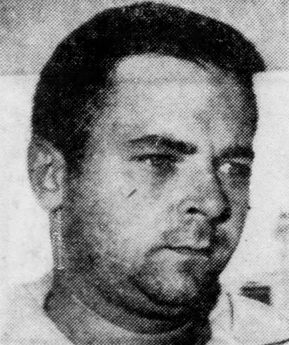
Where it happened
Why this case
“This is one of the least-known cases in the book and one of the hardest to research. Almost everything comes from Michigan newspapers of the day. I included it because the warning signs were on the public record for three years before that September night, and nobody acted on them.”
— Jason Neal, author of True Crime Case Histories


