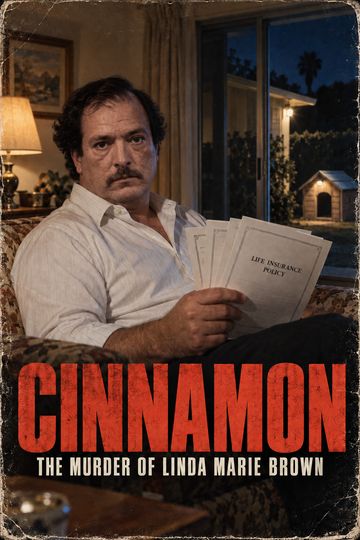

Volume 28 · Chapter 5
Cinnamon
David Arnold Brown
Victim: Linda Brown
Case at a glance
- When
- March 19, 1985
- Where
- Garden Grove, Orange County, California, United States
- Perpetrator
- David Arnold Brown
- Victim
- Linda Brown
- Outcome
- Convicted of first-degree murder in 1990 and sentenced to life without parole; died in prison in March 2014
The case
David Arnold Brown ran a computer data-recovery business in Orange County, California, and had been married five times. In 1985 he lived in Garden Grove with his wife Linda, their baby daughter, his 14-year-old daughter Cinnamon, and Linda’s 17-year-old sister, Patti Bailey.
Early on March 19, 1985, Linda was shot twice as she slept. Police found Cinnamon in the backyard doghouse, sick from a drugged drink her father had mixed, with a note apologizing for the killing. She took the blame, said she could not remember the shooting, and was convicted of first-degree murder in juvenile court. Brown collected $842,793 in life insurance and married Patti in secret the next year. In late 1987 Cinnamon told investigators the truth: her father had spent years convincing both girls that Linda meant to kill him, then left the house so they would act. Detectives had Cinnamon record his visits, Patti confirmed the plot, and Brown was arrested. From jail he tried to hire an inmate to kill Patti and two officials on the case.
In 1990 Brown was convicted of first-degree murder for financial gain and sentenced to life without parole, largely on his own recorded words. His appeal was rejected in 1992. Cinnamon was paroled after about seven years, and Patti admitted first-degree murder in juvenile court. Brown died of natural causes at Corcoran State Prison on March 20, 2014.
Read the full story
This case is told in full in True Crime Case Histories, Volume 28 by Jason Neal.
Get Volume 28 on AmazonCase photographs
3 photos


Where it happened
Why this case
“Two teenage girls, both being manipulated by the same man, and one of them went to prison while he collected the insurance. I wanted to trace how he did it, one conversation at a time, because coercion like this rarely looks like force from the outside. It looks like a father who worries a lot.”
— Jason Neal, author of True Crime Case Histories


