
Volume 28 · Chapter 6
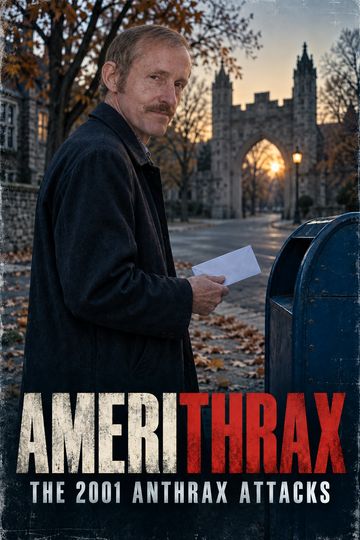
Amerithrax
Bruce Ivins
Victims: Robert Stevens · Thomas Morris Jr. · Joseph Curseen · Kathy Nguyen · Ottilie Lundgren
Case at a glance
- When
- September and October 2001
- Where
- Letters mailed from New Jersey to New York, Florida and Washington, D.C.; spores traced to Fort Detrick, Maryland, United States
- Perpetrator
- Bruce Edwards Ivins, named by the FBI as the sole perpetrator; never charged
- Victims
- Robert Stevens, Thomas Morris Jr., Joseph Curseen, Kathy Nguyen, Ottilie Lundgren
- Outcome
- No one was ever charged; Ivins died in July 2008 and the FBI closed the investigation in February 2010, naming him as the sole perpetrator
The case
One week after the September 11 attacks, envelopes of anthrax spores were mailed from New Jersey to news organizations in New York and Florida. In October a second, more refined batch went to Senators Tom Daschle and Patrick Leahy. Five people died: photo editor Robert Stevens, postal workers Thomas Morris Jr. and Joseph Curseen Jr., hospital worker Kathy Nguyen and Ottilie Lundgren, a 94-year-old Connecticut widow. At least 17 others were infected.
The investigation, code-named Amerithrax, was one of the FBI’s largest. For years it centered on Steven Hatfill, a former Army researcher publicly named a person of interest. He was never charged, and in June 2008 the government settled his lawsuit for $5.8 million. New genetic techniques traced the mailed spores to a flask kept by Bruce Ivins, a microbiologist at the Army’s biodefense laboratory at Fort Detrick, Maryland. Of a thousand samples tested, only eight shared its four mutations. Investigators also could not explain his solitary night hours in the containment lab that autumn.
Ivins died on July 29, 2008, of an overdose, as prosecutors prepared charges. In February 2010 the Justice Department closed the case, naming him the sole perpetrator. A National Academy of Sciences review in 2011 called the science consistent with that conclusion but not definitive, and a 2014 audit criticized the FBI’s methods. Robert Stevens’ family settled with the government for $2.5 million.
Read the full story
This case is told in full in True Crime Case Histories, Volume 28 by Jason Neal.
Get Volume 28 on AmazonCase photographs
9 photos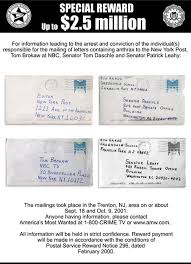

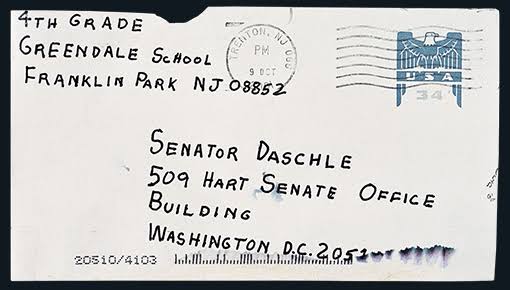


Where it happened
Why this case
“I was drawn to this case because the official answer arrived only after the accused was dead and could not defend himself. The evidence against Ivins is substantial and strange, and the doubts are real too. I tried to lay both out plainly and let readers sit with an ending that a court never tested.”
— Jason Neal, author of True Crime Case Histories


