

Volume 28 · Chapter 2
The Vanishing Act
Elmer Crawford
Victims: Therese Crawford · Katherine Crawford · James Crawford · Karen Crawford
Case at a glance
- When
- July 1970
- Where
- Glenroy, Melbourne, and Loch Ard Gorge near Port Campbell, Victoria, Australia
- Perpetrator
- Elmer Kyle Crawford
- Victims
- Therese Crawford, Katherine Crawford, James Crawford, Karen Crawford
- Outcome
- Never arrested; a 1971 coronial inquest found him responsible; a $100,000 reward was announced in 2008 and he has not been located
The case
Elmer Kyle Crawford was a 40-year-old Irish emigrant who worked for the Victoria Racing Club and did unlicensed electrical jobs on the side. He lived with his wife Therese and their children on Cardinal Road in Glenroy, in Melbourne’s north. Therese, 35, was three months pregnant. The children were Kathryn, 13, James, 8, and Karen, 6. Therese had discovered he was stealing from his employer, and the couple had just signed wills leaving him a large sum if his family died.
On July 2, 1970, the family’s car was found at the foot of the cliffs at Loch Ard Gorge near Port Campbell, the bodies of Therese and the three children inside. Police quickly concluded it was no accident. Three had been killed with a device Crawford built from electrical cable and the youngest beaten about the head, at the Glenroy house, before the bodies were driven about 200 kilometers to the coast. A hose run from the exhaust was meant to suggest a mother’s murder-suicide. Elmer was seen at the home that day, then vanished.
A coronial inquest in 1971 found Crawford responsible, but he was never arrested. In February 2008, Victoria Police announced a $100,000 reward and an age-progressed photograph. In 2010 an unidentified man who died in Texas under false names was compared with FBI facial-recognition help, but DNA from a relative ruled him out.
Read the full story
This case is told in full in True Crime Case Histories, Volume 28 by Jason Neal.
Get Volume 28 on AmazonCase photographs
6 photos


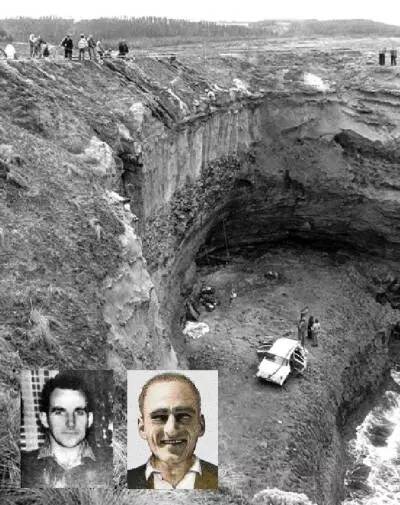

Where it happened
Why this case
“Family annihilation cases usually end with the killer dead by his own hand. This one does not end at all. A man built a device to kill his family, drove them to the coast, staged an accident and walked out of history. I kept returning to the question of how a person disappears so completely in 1970.”
— Jason Neal, author of True Crime Case Histories


